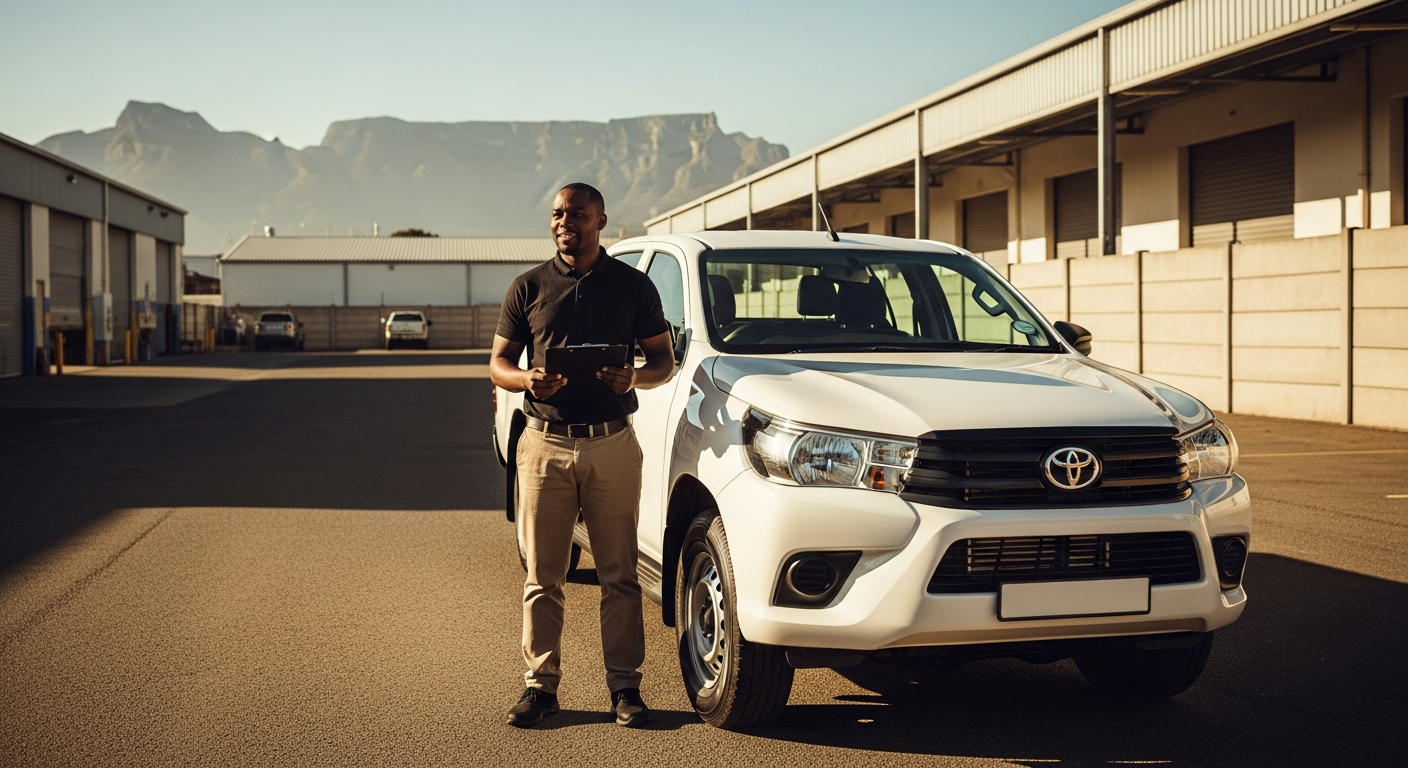
Driver jobs are one of the most accessible — and most competitive — categories in Cape Town in 2026. E-commerce volumes are still climbing, the building-supply sector is busy across the Cape Metro, and the long-haul corridor between Cape Town and Gauteng is short of qualified Code 14 operators. If you have a valid licence, a clean record and your paperwork in order, you can be working within two weeks.
The catch is the paperwork. Most rejected driver applications in Cape Town aren't rejected for the drive — they're rejected for an expired PrDP, a missing medical, or an undisclosed point on the record. This guide walks the whole thing in the right order so you don't waste a depot's time and your own. Open the For Jobseekers hub → for the full set of application guides, or jump straight into the driver and logistics category to see what's live.
Step 1 — confirm your paperwork is current
Before you send a single CV, lay these out on the table and check the expiry date on each:
- Driver's licence card — the plastic one. Check the expiry. If it's within 6 months of running out, renew first.
- PrDP (Professional Driving Permit) — separate document, renewed every two years. Categories: G (goods), P (passengers up to 16), D (dangerous goods).
- ID document or smart card.
- Medical certificate — required for PrDP renewal and most employer onboarding. Valid for 2 years; any GP can issue one for R350–R600.
- Driving record / abstract from your local traffic department — proof of demerit points and history. R45 at most DLTCs.
If your PrDP has expired or is about to, fix this first — booking via eNATIS online is the fastest route in 2026, but you'll still wait three to six weeks for the appointment at Gallows Hill, Brackenfell, Plumstead, or Bellville. Applying without a valid PrDP wastes everyone's time.
Step 2 — match the licence code to the right roles
- Code 8 (light motor vehicle): bakkies, panel vans, small delivery vehicles. Most courier and last-mile e-commerce roles. Highest volume, lowest pay band.
- Code 10 (rigid truck up to 16 tonnes): FMCG distribution, building supplies, beverage delivery, mid-sized refrigerated transport.
- Code 14 (articulated, over 16 tonnes): long-haul national routes, container haulage, intercity FMCG. Highest pay band, longest time away from home.
- Code 11: rigid truck with trailer. Less common now but still relevant for some agriculture and waste sectors.
Don't apply for a Code 10 role with only a Code 8 licence and the line "willing to upgrade". You won't get an interview. If you want to move up, see Step 7 — there are routes.
Step 3 — write the CV like a driver, not a generic applicant
A driver CV has slightly different priorities to a generic one. The fundamentals — clean structure, real numbers, plain language — are covered in our South African CV rewrite guide. Specifically for driving, add these blocks:
- Licence summary at the top: "Code 14, valid until 11/2028. PrDP categories G and D, valid until 03/2027. Clean record, zero AARTO points."
- Kilometre experience: rough kilometres per week or per year in each role. "Approx 2,200 km/week across Western Cape and Eastern Cape."
- Fleet and vehicle types: Hino 700, MAN TGS, Scania R-series — the specific trucks you've handled. Fleet managers care.
- Claims and incidents: if you have a clean record, say so explicitly. "Zero goods claims and zero at-fault collisions in current role." If you have one, address it briefly and move on.
Step 4 — apply through the right channels
Driver hiring in Cape Town happens through three main channels, in roughly this order of quality:
- Direct on company depots. Walking your CV in to the gate at a Bellville or Epping depot still works for building-supply and FMCG. Tuesday and Thursday mornings, 8am sharp, ask for the fleet supervisor.
- Vetted job boards like the driver and logistics category here, where employers are verified before they post.
- Specialist driver recruiters — a handful of agencies in Cape Town do nothing but driver placements. APSO-registered ones are safe; anonymous WhatsApp "recruiters" are not.
Avoid unsolicited WhatsApp offers and pay-to-apply learnerships — see our job scams playbook for the current tells. Driver applicants are a favourite target for fake "uniform deposit" and "medical fee" scams.
Step 5 — prep for the road test
Almost every Cape Town fleet runs a practical road test before extending an offer. Expect 20 to 40 minutes with a depot supervisor or hired assessor. The route usually covers:
- A pre-trip vehicle check: oil, water, lights, tyre pressure, load straps. Walk it visibly even if you've done it 10,000 times.
- A reverse into a loading bay — the single most common fail.
- A short urban section with traffic circles and at least one tight residential street.
- A freeway section, often a quick loop on the N1 or N2.
- A simulated drop or pickup, including paperwork or PDA scanning.
If you haven't driven that specific vehicle class in a while, ask a friend in the industry for an hour behind the wheel before the test. Most depot supervisors can tell within five minutes whether you're current.
Step 6 — what employers check that you might not expect
- AARTO points balance. The points-demerit rollout is fully active in 2026 and fleet employers cross-check before extending a permanent offer.
- Criminal record check via SAPS. Cleared in 7 to 21 days normally; budget for it.
- Reference call to your last fleet supervisor. Not "the HR contact" — the actual supervisor. They want to know if you brought trucks back clean and on time.
- Eye test and basic medical, especially for Code 10/14 and any dangerous-goods role.
- Vehicle abuse history. The big national fleets share notes informally. A reputation for trashing gearboxes follows you.
Step 7 — moving from Code 8 to Code 10 or 14
If you're starting in last-mile delivery and want to step up, two routes work in Cape Town:
- Employer-funded upgrade. Larger fleets (Tiger Brands, AB InBev, Coca-Cola Beverages, Cape Building Supplies and similar) will sometimes fund a Code 10 upgrade in exchange for a 12 or 18-month service commitment. Ask in the interview, not month six.
- Self-funded driving school. Budget R5,500–R9,000 for Code 10, R7,500–R13,000 for Code 14, including the PrDP medical, fingerprinting and DLTC fees. Pays itself back inside a year on the salary bump.
If you don't have matric, the upgrade route still works — no driving licence test in SA requires matric. There's plenty of work in Cape Town without matric across the driving sector specifically.
Step 8 — the offer and the package
When the offer arrives, read the whole thing before celebrating. Fleet contracts have some standard quirks:
- Per-trip allowances vs basic — long-haul roles especially. Make sure the total package adds up to what you expected.
- Damage liability clauses — some fleets push a percentage of damage costs onto the driver. Push back if it's more than R1,500 per incident or if there's no insurance buffer.
- Stand-by and waiting time — is it paid? FMCG drivers can spend 90 minutes waiting at a customer's loading dock.
- Overtime structure — driving hours are regulated under the BCEA. Anything that puts you systematically over 45 hours/week without paid overtime is a red flag.
For the actual negotiation script, see our salary negotiation guide for Cape Town. Driver roles have less basic-salary flex than office roles, but more flex on per-trip rates and overtime structure.
The five quick wins that get drivers hired faster
- Renew the PrDP before applying, not after the offer.
- Carry physical copies of your licence, PrDP, medical and driving record to every interview.
- Mention specific trucks and routes by name on the CV.
- Apply on Tuesday or Wednesday mornings — the depots have time then.
- Confirm references in writing before you give them out. A surprised reference is a bad reference.
Get the paperwork sorted this week, sharpen the CV, and go. Browse current driver jobs in Cape Town → or open the full Cape Town jobs board → to see what's live this week.
Or head back to the For Jobseekers hub → for the rest of our application guides, CV rewrites and your rights at work.