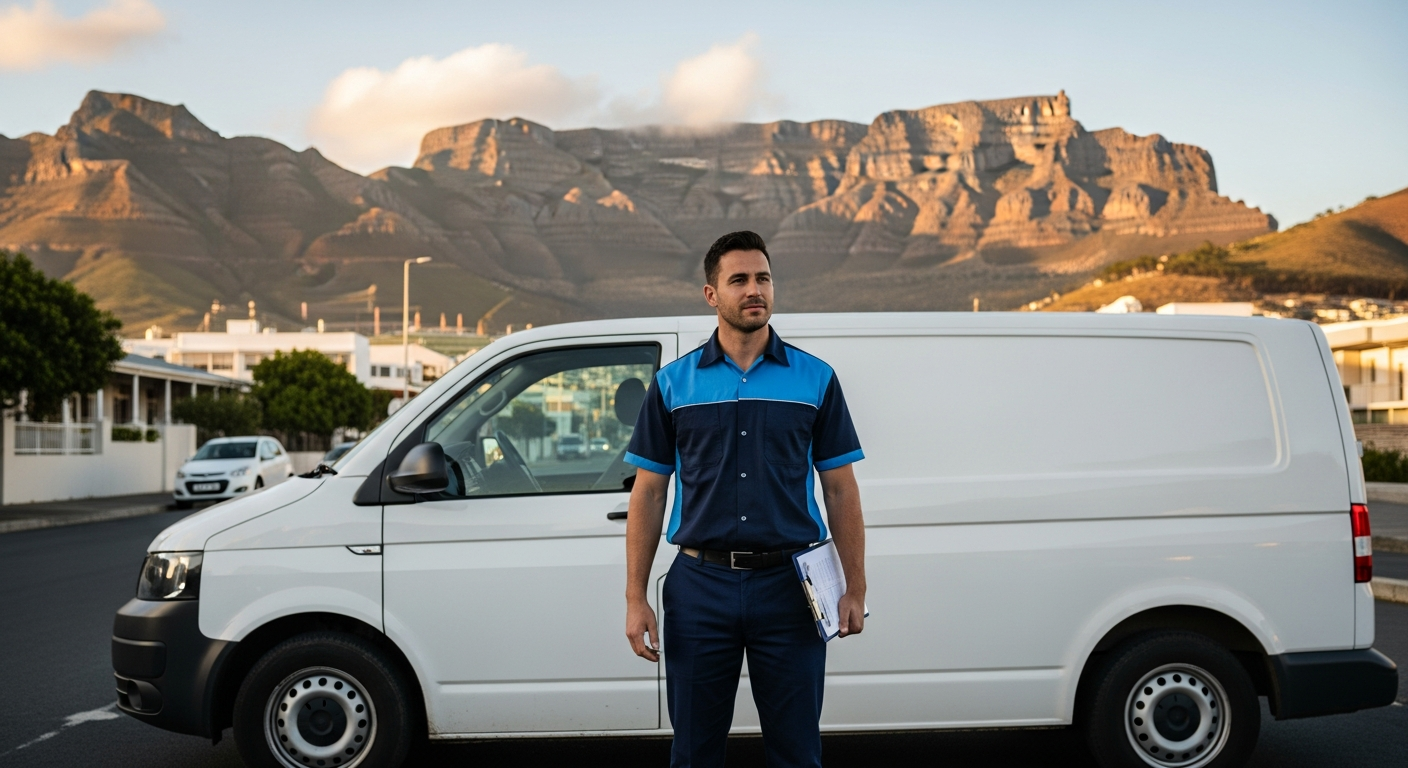
A driver is one of the riskier hires a small business can make. They handle a vehicle worth hundreds of thousands of rand, your stock, your brand on the side of the panel, and often cash too. Get the hire wrong and you're not just out a salary — you're paying excess on a claim, explaining a damaged client delivery, or worse, dealing with the Road Accident Fund.
This guide walks through how to hire a driver for hire in Cape Town safely and legally: which licence code to ask for, when a PDP is non-negotiable, what to pay in 2026, how to vet properly, and the contract clauses that actually matter when something goes wrong.
Post a job in Cape Town → and we'll cover the rest below.
Start with the licence code
South African driving licence codes confuse a lot of first-time employers. Here's the plain-English version:
- Code B / EB (old code 8) — Light motor vehicles up to 3,500 kg GVM, including a light trailer for EB. This covers your standard delivery bakkie, 1-tonne panel van, and most courier vehicles. The majority of last-mile drivers in Cape Town sit here.
- Code C1 (old code 10) — Rigid trucks between 3,500 kg and 16,000 kg GVM. Medium delivery trucks, smaller tippers, and the workhorses of the Epping and Montague Gardens warehouse strip.
- Code C / CE (old code 14) — Heavy rigids over 16,000 kg, plus articulated combinations (truck-tractor and trailer). Long-haul, interlink, superlink, fuel tankers — all code 14.
Ask to see the physical card and read the codes on the back. If you've been told "I drive trucks" and the card only shows B, walk away. It happens more often than you'd think.
The Professional Driving Permit (PDP)
A PDP is a separate authorisation that sits alongside the licence. It's required if the driver is:
- Operating a goods vehicle with a GVM over 3,500 kg (so most code 10 and all code 14 work)
- Transporting passengers for reward — taxis, shuttles, school transport, tour buses
- Carrying dangerous goods (separate "D" category PDP)
The PDP is valid for two years and the holder needs a clean SAPS criminal record check and a medical certificate to get it. The category letter on the PDP tells you what they're allowed to carry: G for goods, P for passengers, D for dangerous goods. A passenger-shuttle operator with only a G permit isn't legally allowed to move people. Check the expiry date — an expired PDP voids your insurance the moment the driver leaves the yard.
What to pay a driver in Cape Town in 2026
Salaries vary widely by code, by industry, and by whether the role includes loading, sleep-out, or cash handling. These are realistic Cape Town ranges as of mid-2026:
| Role | Typical monthly (basic) | Notes |
|---|---|---|
| Code 8 delivery driver | R6,000 – R10,000 | Higher end for courier and pharmaceutical work |
| Code 10 driver | R8,000 – R14,000 | Furniture, building supplies, FMCG distribution |
| Code 14 driver (local) | R10,000 – R18,000 | Container, fuel, bulk haulage around the Cape |
| Code 14 long-haul | R14,000 – R25,000+ | Plus subsistence (R200–R350/day) and trip bonuses |
Add fuel cards, performance bonuses, accident-free monthly incentives, and overtime, and the cost-to-company climbs. For a long-haul driver running Cape Town to Gauteng on a weekly turn, you'll often see a basic of R16,000 plus a R250-per-night sleep-out allowance plus a per-kilometre top-up. Look — drivers know what the going rate is. Underpay and they'll leave for the operator down the road in Killarney Gardens.
If you want a full breakdown of UIF, COIDA, and the other on-costs that sit on top of base pay, our guide to hiring costs in South Africa walks through the numbers line by line.
Vetting: don't skip this step
You're handing someone the keys to a R400,000 vehicle. A proper vet costs less than a tank of diesel.
1. Verify the licence and PDP. The physical card is a start. For peace of mind, do an eNaTIS lookup through a registered verification service (R50–R150 per check). It tells you whether the licence is current, whether it's been suspended, and whether the PDP is genuine. Fake PDPs printed at backyard shops are a real problem.
2. Run a criminal record check. Through Managed Integrity Evaluation (MIE), iFacts, or LexisNexis you'll pay R150–R300 and get results in 24–72 hours. You need the candidate's signed consent in writing — the SAPS clearance form makes this easy. For PDP holders this should match what the Department of Transport already required, but a fresh check protects you if anything's changed.
3. Check work history properly. Phone the last two employers. Not the reference the candidate gave you — the company's main number, ask for HR or the transport manager. Verify dates, the vehicles they drove, and crucially, why they left. A driver who's been fired for an accident or theft will often hide it on the CV.
4. Driver assessment. For code 10 and code 14 hires, do a road test before you sign anything. A short circuit on the N1 with a loaded trailer tells you more than any interview. Many operators in Epping use independent assessors (R400–R800 per test) for an objective opinion.
Insurance, telematics and the risk side
Your fleet insurer is going to ask three questions: who's driving, what's their record, and what's in the vehicle. The cheaper your premium, the stricter the conditions — under-25 driver exclusions, geographic limits, mandatory tracking, and so on.
Most Cape Town fleets above five vehicles now run telematics. Cartrack, Netstar, MiX Telematics — they all do driver scoring (harsh braking, speeding, cornering), geo-fencing, and live tracking. Dashcams (forward and driver-facing) have come down in price to under R3,000 installed and pay for themselves the first time a contested accident lands on your desk. Fuel cards from Wesbank or Standard Bank stop the old trick of filling up a friend's car at the same pump.
None of this replaces hiring the right person. But it does mean that when the inevitable scrape happens on the M3 in the rain, you have evidence and a paper trail.
Contract essentials for drivers
A driver contract is not the same as an office contract. The BCEA treats drivers differently in a few important ways and your contract needs to reflect that.
Working hours. Drivers "employed mainly to drive" are partly exempt from the BCEA's ordinary-hours and overtime sections. You still owe meal intervals and rest periods, but the rigid 45-hour week and 10-hour overtime cap are applied more flexibly. For long-haul, build sleep-out, layover, and turnaround time into the contract explicitly. Drivers earning above the BCEA earnings threshold (R261,748.45/year from 1 April 2026, roughly R21,812/month) are excluded from those sections entirely — contract whatever's reasonable.
Overtime, Sundays and public holidays. If the driver is under the threshold, the standard BCEA rates apply: 1.5x for overtime, 2x for Sundays unless ordinarily worked. Most operators consolidate this into a flat shift allowance to keep payroll simple, which is fine provided the employee is no worse off than they would be under BCEA.
Accident and damage policy. Spell out the process: immediate notification, breathalyser, accident report form, photos, police case number if required. Make clear that the company won't deduct from wages without following section 34 of the BCEA (written consent, fair process, max one quarter of pay).
Fuel reconciliation. Daily or weekly reconciliation of fuel purchases against odometer readings. Variance over a set percentage triggers an investigation. Spell out the consequences — most often a final written warning, then dismissal for repeat offences.
Code of conduct. Cellphone use while driving (zero tolerance), alcohol and drugs (zero tolerance, with random testing clause), unauthorised passengers, deviating from route, personal use of the vehicle. Get this signed.
For a worked example of how to draft the job ad itself — title, requirements, benefits — see our guide to writing a job advert in South Africa with examples.
Where to advertise
Word of mouth is still the most common way drivers find work in Cape Town, which is a problem when you don't already have a driver network. The fastest way to reach active candidates is a targeted post on the driver and logistics category, where job seekers are filtering specifically for vehicle work.
If you're hiring regularly — three or more drivers a year — look at a recruiter subscription instead of one-off posts. Compare what's available on the pricing page and see what other operators in the city are doing on the Cape Town Jobs employers page.
Post a driver job in Cape Town → and start receiving applications within 24 hours.