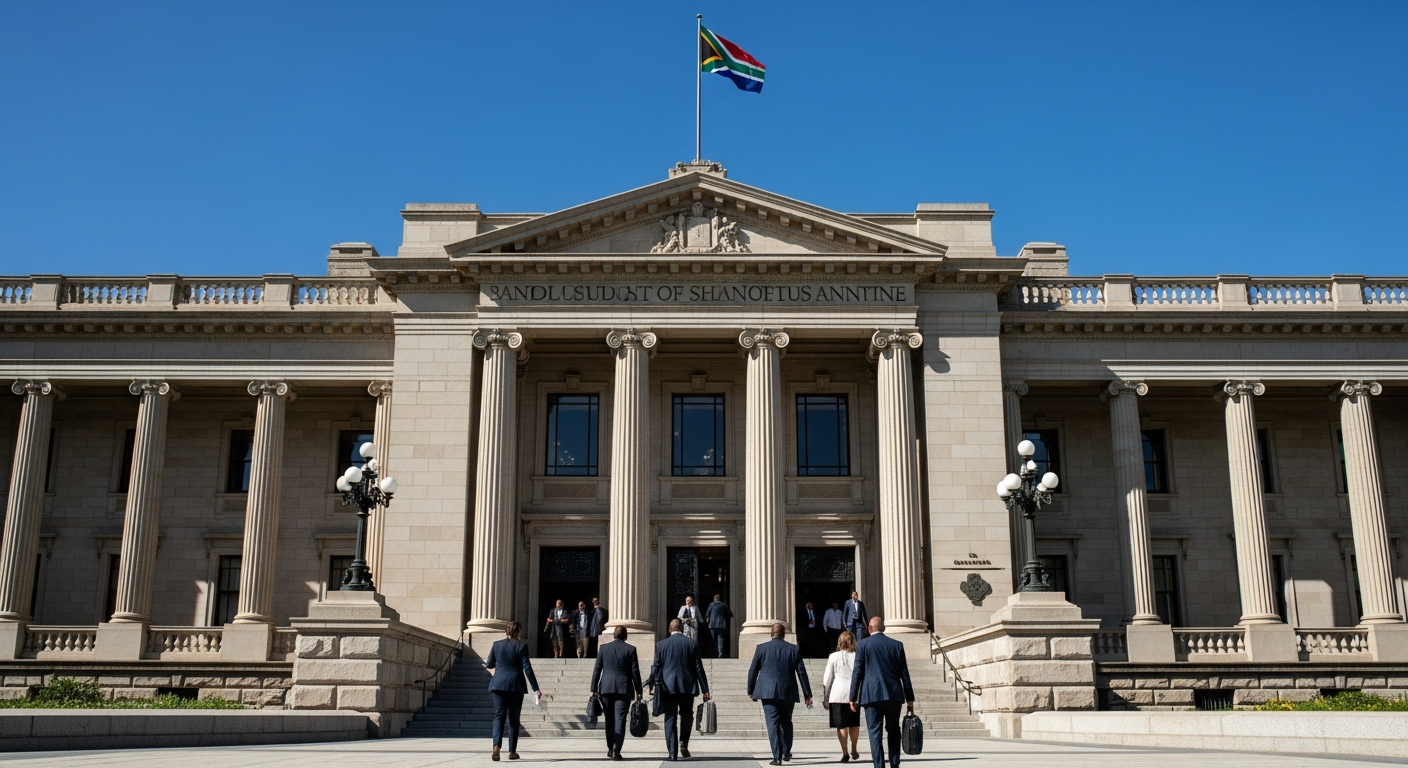
Government jobs in Cape Town offer something the private sector often can't: stability. While private companies restructure, retrench, and close, the public sector provides consistent employment, guaranteed pension contributions, medical aid, and annual salary increases. It's not the most exciting career path, but for many people, it's the smartest one.
The challenge is finding and successfully applying for these positions. Government recruitment works differently from the private sector, and understanding the process gives you a significant advantage.
Who hires in the public sector in Cape Town
There are three main employers:
City of Cape Town — The metropolitan municipality employs over 26,000 people across departments like water and sanitation, electricity, transport, law enforcement, planning, and administration. From traffic officers to engineers, librarians to firefighters — the City hires across a wide range of roles.
Western Cape Government — The provincial government runs health (public hospitals and clinics), education (public schools), social development, agriculture, and transport. Positions range from administrative clerks to medical specialists, teachers, social workers, and environmental officers.
National government departments — Departments like Home Affairs, SARS, the Department of Labour, and the South African Police Service (SAPS) have Cape Town offices. These are national positions based in Cape Town rather than city-specific roles.
Types of government jobs available
- Administrative and clerical — Admin clerks, registry officers, data capturers, and secretaries. These are the most common entry-level government positions and typically require matric plus basic computer skills.
- Professional and technical — Engineers, accountants, IT specialists, planners, and legal advisors. These roles require relevant qualifications and pay significantly more.
- Health workers — Nurses, doctors, pharmacists, radiographers, and allied health professionals for public hospitals like Groote Schuur, Tygerberg, and community health centres.
- Education — Teachers at public schools across the Western Cape. The Western Cape Education Department (WCED) manages recruitment for permanent and temporary teaching positions.
- Law enforcement — Metro police, traffic officers, and SAPS officers. Law enforcement recruitment follows its own application process with physical fitness requirements.
- Trades and general workers — Electricians, plumbers, mechanics, gardeners, and general workers for municipal infrastructure maintenance.
Government salary structure
National and provincial government posts are graded on the DPSA salary levels, which are the same in Cape Town as in the rest of the country. Monthly gross basic salary before deductions, from 1 April 2026 (DPSA Circular 15 of 2026):
- Level 1-4 (General workers, cleaners) — R11,200 to R19,700 per month
- Level 5-6 (Admin clerks, data capturers) — R19,800 to R27,500 per month
- Level 7-8 (Senior admin, junior professionals) — R28,200 to R40,500 per month
- Level 9-10 (Assistant directors, professionals) — R40,600 to R59,500 per month
- Level 11-12 (Deputy directors, senior professionals) — R77,700 to R108,100 per month as an all-inclusive package
Levels 1 to 10 are basic salaries; Levels 11 and 12 are paid as all-inclusive packages. City of Cape Town posts use the municipality's own pay grades, so their adverts quote different figures. On basic-salary posts, when you add the pension contribution (employer pays 13%), medical aid subsidy (R2,000+), housing allowance (R1,200+), and annual increases, the total package is substantially more than the base salary.
How to apply — step by step
- Find vacancies — Check these sources weekly:
- DPSA website (dpsa.gov.za) for national and provincial positions
- City of Cape Town careers page (capetown.gov.za/work-and-business/jobs)
- Western Cape Government jobs portal
- Sunday newspapers (some departments still advertise here)
- Complete the Z83 form — This is the standard government application form. Download it from the DPSA website. Fill it in completely — incomplete forms are disqualified immediately.
- Prepare your documents — CV, certified copies of your ID, qualifications, and driver's licence (if required). Certifications must be less than six months old.
- Submit on time — Government closing dates are strict. Late applications are not accepted, no exceptions.
- Be patient — The process takes months. You may be shortlisted for an interview weeks or months after the closing date. Keep applying for other positions while you wait.
Common mistakes that get applications rejected
- Incomplete Z83 forms — every field must be filled in
- Missing certified copies of qualifications
- Certifications older than six months
- Applying for positions you don't qualify for (government is strict about minimum requirements)
- Late submissions
- Paying someone to apply on your behalf — this is a scam. Government applications are always free
Government employment isn't glamorous, but it's reliable. In an economy where private sector jobs can disappear overnight, a government position provides the kind of security that lets you plan your life with confidence. Browse our full job listings for current opportunities across all sectors in Cape Town.
You might also be interested in jobs available without matric — many government entry-level roles accept alternative qualifications. And if you're heading for an interview, our interview tips guide covers panel interviews common in the public sector.