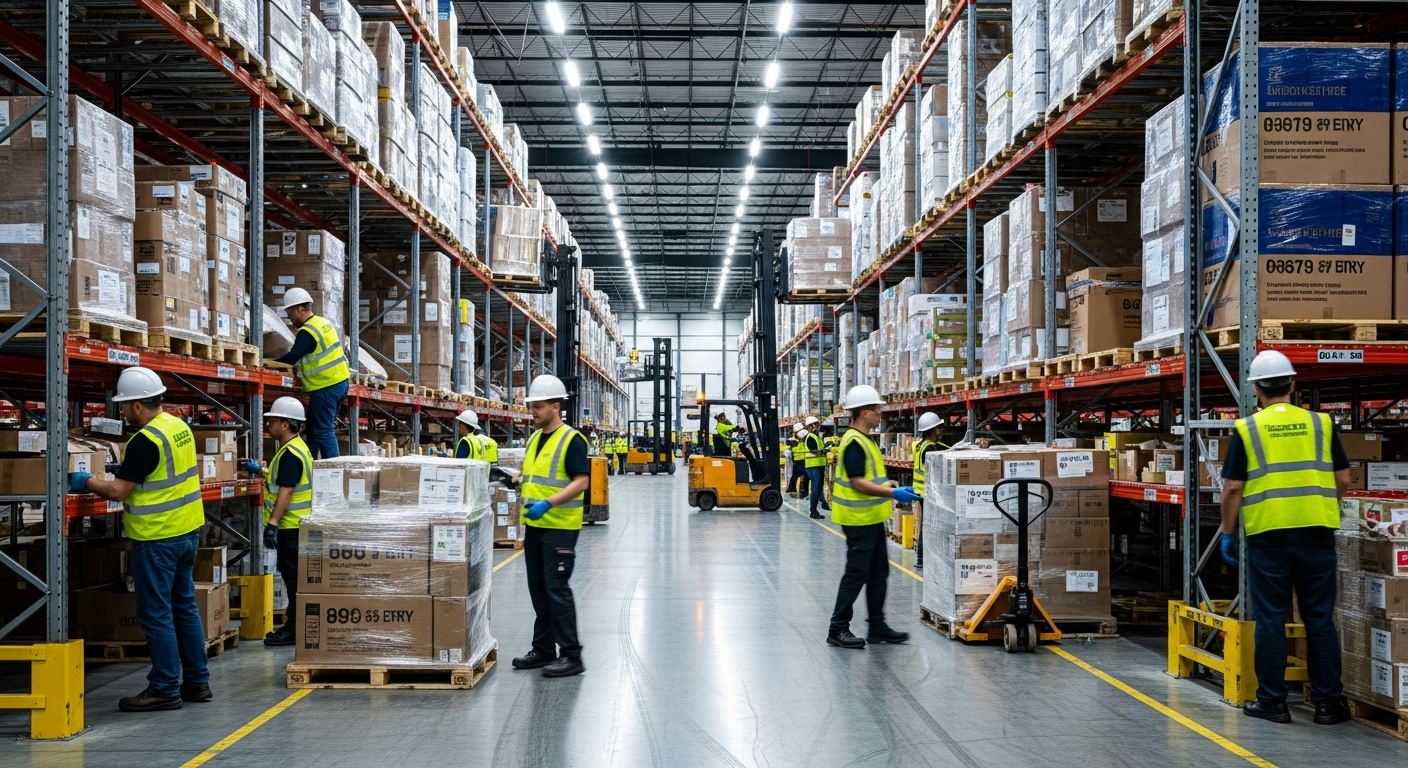
Cape Town's warehouse and logistics sector has grown significantly, driven by e-commerce expansion and the city's position as the Western Cape's main distribution hub. Every product you buy online, every item on a supermarket shelf, and every package that arrives at your door passes through a warehouse. That means a steady stream of jobs for people willing to do physical work in a structured environment.
The work isn't glamorous, but it's consistent. Warehouses don't close — goods need to be received, sorted, stored, and dispatched every day. And unlike many industries, warehousing offers a clear progression path from general worker to supervisor to management.
Types of warehouse jobs available
Warehouse operations break down into several distinct roles, each with different requirements and pay levels:
General warehouse worker — The entry point. You'll do a mix of tasks: receiving stock, unpacking deliveries, packing orders, cleaning, and organising the warehouse floor. No specific experience is needed — employers train you on the job. Physical fitness is the main requirement.
Picker and packer — You pick products from shelves based on order lists and pack them for dispatch. Speed and accuracy matter. E-commerce companies like Takealot, Checkers Sixty60, and various courier firms hire large numbers of pickers and packers. This role suits people who are detail-oriented and can work at a steady pace.
Forklift operator — Operating a forklift to move heavy pallets and stock around the warehouse. You need a valid forklift licence (obtainable through a short training course in Cape Town). This pays more than general warehouse work and is a useful qualification to have — forklift operators are always in demand.
Stock controller / inventory clerk — Managing stock levels, conducting stock counts, capturing data into warehouse management systems, and ensuring accuracy between physical stock and system records. Basic computer skills and attention to detail are essential. This role often leads to admin and office positions.
Receiving clerk — Checking incoming deliveries against purchase orders, inspecting goods for damage, and capturing receipts into the system. You need to be thorough — mistakes here affect the entire supply chain.
Warehouse supervisor — Managing a team of warehouse workers, overseeing daily operations, handling scheduling, and ensuring targets are met. You typically need two to five years' warehouse experience to step into this role.
Dispatch coordinator — Organising outbound shipments, coordinating with drivers and courier services, and ensuring orders go out on time and to the right destination.
What warehouse jobs pay in Cape Town
Here's a realistic breakdown of current warehouse salaries:
- General worker / labourer — R4,500 to R7,000 per month. Entry-level, no experience required.
- Picker / packer — R5,000 to R8,000 per month. E-commerce warehouses sometimes offer production bonuses.
- Forklift operator — R6,000 to R11,000 per month. The licence makes a real difference to your earning potential.
- Receiving clerk — R6,000 to R10,000 per month. Computer literacy pushes you toward the higher end.
- Stock controller — R7,000 to R14,000 per month. This bridges warehouse floor work and office-based inventory management.
- Warehouse supervisor — R10,000 to R18,000 per month. Depends on warehouse size and number of staff managed.
- Warehouse manager — R15,000 to R30,000 per month. Responsible for the entire warehouse operation.
Overtime is common in this industry, especially during peak retail periods (November to January). Some workers add 20-30% to their base salary through overtime. For a complete breakdown of warehouse and manufacturing pay, see our warehouse and manufacturing salary guide.
Where the warehouses are in Cape Town
Cape Town's warehouse and distribution centres cluster in specific industrial areas. Knowing where they are helps you target your search:
Epping Industria — One of Cape Town's largest industrial zones. Major retailers, FMCG distributors, and logistics companies operate warehouses here. It's well-connected by road and close to the N1/N2 interchange.
Montague Gardens — Another major industrial hub with warehouses for building materials, automotive parts, food distribution, and general logistics. Several large courier depots are based here.
Airport Industria — Close to Cape Town International Airport. Warehouses here handle air freight, courier services, and cold storage for perishable goods. The proximity to the airport creates demand for workers who can handle time-sensitive shipments.
Brackenfell and Kraaifontein — Growing industrial areas in the northern suburbs. Newer distribution centres have been built here, including facilities for online retailers. Brackenfell is increasingly popular with logistics companies due to lower rent and good road access.
Killarney Gardens — Between Milnerton and Table View. A mix of smaller warehouses and distribution centres, particularly for building supplies and hardware.
Strand and Somerset West — The Helderberg industrial area serves the eastern corridor. Manufacturing and distribution operations for the wine industry and food processing are concentrated here. Check our Winelands jobs guide for more on this area.
How to get a warehouse job
Breaking into warehouse work is more straightforward than many industries:
Walk-ins still work — Many warehouses accept walk-in applications, especially in Epping and Montague Gardens. Dress neatly, bring a printed CV and certified copies of your ID and matric certificate. Ask to speak to the warehouse manager or HR department. Some companies won't have positions on the day but will keep your CV on file for when they do.
Staffing agencies — Warehouse positions are frequently filled through labour brokers and temp agencies. Companies like Workforce Staffing, Adcorp, and Quest Staffing regularly place workers in Cape Town warehouses. Register with relevant agencies to access positions that aren't advertised publicly.
Online applications — Browse current warehouse vacancies on Cape Town Jobs, filtered by location. Large employers like Shoprite, Pick n Pay, and Bidvest also list warehouse positions on their own career pages.
Get your forklift licence — If you want to earn more and have more job options, invest in a forklift operator course. Training takes three to five days and costs R1,500 to R3,500 in Cape Town. Accredited providers include the likes of Liftruck Training Institute and various TETA-accredited centres. The licence pays for itself within the first month of higher wages.
What to expect on the job
Warehouse work is physical. You'll be on your feet for most of the shift, lifting boxes, operating equipment, and moving between storage areas. Here's what a typical day looks like:
- Morning shift start (06:00-07:00) — Brief from the supervisor, review of the day's orders and priorities.
- Receiving — Incoming deliveries are checked, counted, and captured into the system.
- Picking and packing — Orders are pulled from shelves, packed, labelled, and staged for dispatch.
- Dispatch — Loaded onto trucks and delivery vehicles for distribution.
- Stock counts — Regular cycle counts to verify inventory accuracy.
- Housekeeping — Keeping the warehouse floor clean and organised. Safety standards require clear walkways and properly stacked pallets.
Health and safety rules are strict. Steel-toe boots are typically required (some employers provide them, others expect you to buy your own). You'll wear high-visibility vests and follow specific procedures for operating machinery and lifting heavy items.
Career progression in warehousing
Warehousing offers one of the clearest progression paths in blue-collar work:
- General worker → Senior picker/packer (6-12 months)
- Forklift operator → Senior operator / trainer (1-2 years)
- Stock controller → Inventory manager (2-3 years)
- Warehouse supervisor → Warehouse manager → Distribution centre manager or Logistics coordinator
Some warehouse workers also transition into driver and logistics roles — if you have a Code 10 or Code 14 licence, the combination of warehouse knowledge and driving capability makes you highly employable in the logistics chain.
If you're starting out with no prior experience, warehouse work is one of the most accessible entry points. The barriers are low, the work is available, and the progression is real.
Common mistakes when applying
- Not mentioning physical fitness — Warehouses need people who can handle physical work. If you're fit and healthy, say so on your CV.
- Ignoring location — Cape Town's industrial areas aren't well served by public transport. Make sure you can actually get to the warehouse reliably, especially for early morning shifts. Some employers provide transport; ask during the interview.
- Not getting your forklift licence — This is the single biggest differentiator for warehouse workers. It immediately puts you in a higher pay bracket and makes you more marketable.
- Applying without proper documents — Bring certified copies of your ID, matric certificate, and any training certificates. Many warehouses won't process your application without these.
Ready to find warehouse work? Browse current warehouse and manufacturing vacancies in Cape Town. New positions are posted daily across all industrial areas.