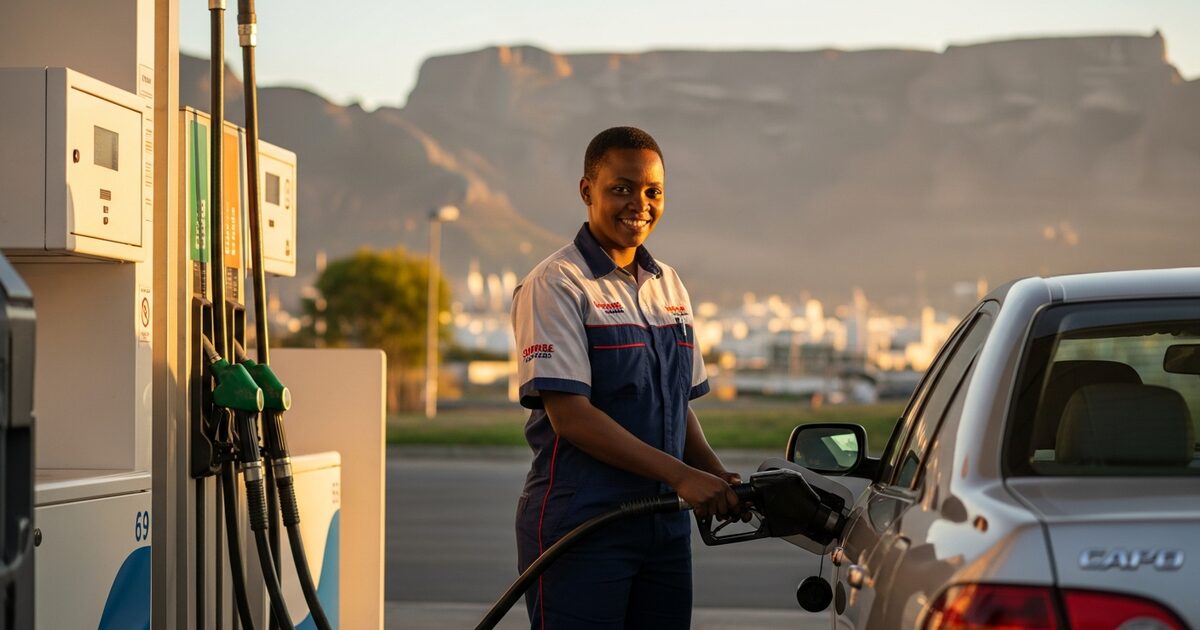
What a petrol attendant in Cape Town actually does
You pump fuel, check oil and tyre pressure, take payment by card or cash, and keep the forecourt clean. On busy Engen, Shell, BP and Sasol sites — especially the 24-hour ones in Cape Town CBD, Sea Point, and along the N1 — you'll do a full shift on your feet, often outdoors in wind and rain. It's repetitive but social, and tips from regulars add up.
What you'll earn
Petrol attendants fall under Sectoral Determination 9: Wholesale & Retail, with a minimum wage set yearly by the Department of Employment and Labour. For 2026 the floor sits around R28/hour, which works out to roughly R5,400 – R6,800 a month for a full 45-hour week, before tips. Branded chain stations (Shell V-Power, BP Express) tend to pay slightly above the floor; independent forecourts pay closer to minimum. Official Sectoral Determination documents are published by the Department of Labour each year.
Night shift typically adds 10–25% on top, and Sunday work is paid at 1.5×. If you're comparing across roles, our 2026 minimum wage breakdown covers the full cost-to-company picture.
What you need to apply
- South African ID or valid work permit
- Grade 9 (sometimes Grade 12) — chains like Shell and BP usually ask for matric
- A clean criminal record check (the forecourt handles cash)
- Basic English communication — enough to take an order and read a card machine
- Ability to stand for 8–12 hours
Driver's licence is not required for the attendant role itself, but if you have one, ask about the forecourt supervisor track — it pays meaningfully more.
Where to look in Cape Town
Highest concentration of forecourt vacancies sits on the major arterials and at high-volume city sites. Start with these suburbs:
- Cape Town CBD — 24-hour stations on Buitengracht and Strand St
- Sea Point and Green Point — high tourist volume, busy weekends
- Century City and Milnerton — N1 commuter traffic
- Bellville and Brackenfell — northern suburbs feeder routes
Browse current vacancies on our General Labour and Driver & Logistics boards — petrol attendant roles are listed under both depending on the employer.
How to actually get hired
Most forecourts hire by walk-in, not by online application. Print 5–10 CVs (one page is fine), put on a clean collared shirt, and walk into the station between 10am and 2pm — that's the quiet window between rush hours when the supervisor has time to talk to you. Ask for the manager by name if you can see a name badge.
Bring your ID, a contactable reference (a previous employer, school principal, or church leader works), and proof of address — most chains require this for the payroll system. If they say "we'll call you," ask politely when you can follow up; calling back in 3 days is normal and shows you're serious.
Avoid recruitment agencies that ask you to pay upfront for "uniform deposits" or "training fees" — these are nearly always scams. We documented the most common ones in our 2026 job scams guide.
The interview — what to expect
It's short. Usually 10 minutes with the forecourt manager. You'll be asked: why you want the job, whether you can do nights and weekends, whether you can handle cash, and one or two basic maths questions ("a customer pays R200 for R147 of fuel — what's the change?"). Dress neatly, look them in the eye, and don't oversell yourself. They're hiring for reliability and attitude, not experience.
If you're new to interviews, our South African interview question scripts have ready-made answers for the most common ones.
Career path from attendant
The realistic progression is: attendant → cashier / shop assistant (the on-site convenience store) → forecourt supervisor → site manager. Supervisors earn R9,000–R13,000; site managers R15,000–R22,000 at branded stations. The jump to supervisor usually takes 12–18 months of solid attendance and zero cash discrepancies.
Related searches and how to use this guide
Whether you searched for petrol attendant jobs in Cape Town, petrol attendant vacancies, petrol station vacancies, or petrol attendant jobs near Khayelitsha, the same advice applies: walk into the forecourt with your ID, matric (if you have it), and a clean two-page CV. Most Cape Town filling-station vacancies are filled in person, not via Gumtree or Indeed — managers want to see you, see your handshake, and check you're presentable. We update current petrol attendant vacancies daily across the Cape Peninsula, so if you don't see what you want today, check back tomorrow or set up a job alert.